Why supplement labels hide their doses, and how to read one anyway
Proprietary blends, label dressing and the four checks that take a minute each.
The long version of the dosage table, one plant at a time, with every trial named.
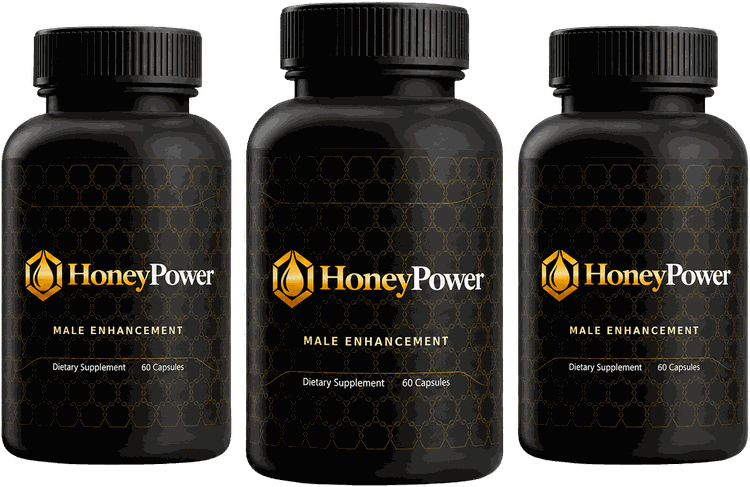
HoneyPower names six botanicals on its artwork and gives an amount for none of them. That is not unusual in this category, and it is also the single most important thing to understand before you buy anything in it, because an ingredient name without a number tells you what a formula is about rather than what it does.
This article is the long version of the dosage table on our main review. One plant at a time: what it is, what the published human research found, and the amount that research gave people. Every figure below belongs to a trial. None of them belongs to this bottle, and where that distinction gets blurry is exactly where supplement marketing lives.
Honey is the brand's whole identity, and it has a real research file. The file is metabolic and athletic rather than sexual, which is worth saying plainly.
The trial most often quoted for trained men gave 70 grams of honey before each training session for eight weeks to competitive cyclists. A crossover trial at 1.2 grams per kilogram of bodyweight per day — roughly 84 grams for a 70 kg man — found honey did not worsen blood lipids compared with sucrose. A controlled comparison at 50 grams of carbohydrate from honey daily for 14 days found honey, sucrose and high-fructose corn syrup produced broadly similar metabolic effects.
The most recent word is a null one. A 2025 crossover trial of a honey-powder carbohydrate and protein supplement found it did not improve endurance cycling performance in recreationally trained cyclists.
On honey and testosterone specifically — the association the category leans on — the only record worth citing is a gerbil study. It is cited here as exactly that, and it is not evidence about men.
The format problem. Honey's smallest studied dose is 50 grams. That is about three tablespoons. Two capsules hold something in the region of 1.5 grams of powder in total, shared across six ingredients. Honey in a capsule is a flavour of brand, not a dose.
This is the best-studied ingredient on the label, and it comes with the most honest summary available anywhere in the category.
The 2021 Cochrane review pooled nine studies in 587 men, none followed for longer than twelve weeks. The pooled effect on erectile function came out below the review's own threshold for a difference a man would notice. The authors restated that conclusion in their own summary paper the following year.
The individual trials read more encouragingly, and they are where the doses come from: 1,000 mg three times a day for twelve weeks — 3 grams daily — and four 350 mg tablets a day for eight weeks, which is 1,400 mg.
Ginseng is also the only ingredient here with a fatigue literature, and it is mixed: positive in middle-aged people with chronic fatigue, positive in a 2024 rheumatic disease trial, and flat in a placebo-controlled trial in advanced cancer.
One safety note that belongs with this ingredient rather than at the end: American ginseng at 1 g twice daily reduced warfarin's effect in a randomised controlled trial. If you take an anticoagulant, that is a measured interaction, not a theoretical one.
Maca produces the cleanest result on this label, and the result is a careful one that deserves to be quoted precisely rather than stretched.
The 2002 trial in adult healthy men gave 1,500 mg or 3,000 mg daily. Self-reported sexual desire rose. Serum testosterone did not move — the paper's own title says so. That is an unusually clean separation of the feeling from the hormone, and it is the most useful single finding in this whole category.
The dose-finding study ran 1.5 g against 3.0 g in SSRI-induced sexual dysfunction, and only the 3 g arm moved. A twelve-week trial in men with mild erectile difficulty used 2,400 mg of dry extract a day. A 175-person safety and efficacy trial used 3 g for twelve weeks. The systematic review found the trials small but consistent on desire.
Every one of those numbers is gram-scale.
Three packs from $49 a bottle, one-time payment, and a 180-day money-back window published by the seller. Check the current price before you decide.
Check Price On The Official SiteTribulus carries the testosterone framing in this category, and it is the ingredient where the human record is least kind to the marketing.
Neychev and Mitev gave 10 and 20 mg per kilo a day to young men in three daily intakes — roughly 700 to 1,400 mg for a 70 kg man — and androgen production did not change. The paper's title states it outright. Five weeks at 450 mg a day in elite rugby league players left strength and body composition no different from placebo.
Where tribulus has looked better is sexual function measured on its own terms rather than hormones: a phase IV trial at 1,500 mg a day standardised to furostanol saponins, and 800 mg a day for thirty days. A 2026 meta-analysis and a 2025 systematic review both read the whole file, and both are worth more than any single trial.
One safety report belongs here: severe nephrotoxicity in a young healthy man, a single case at an unknown dose. One case report is not a pattern, and it is also not nothing.
This is the most mechanistically exciting ingredient on the label and the thinnest in actual people, and holding both of those thoughts at once is the whole skill of reading this category.
Icariin, the active compound, potently inhibits human phosphodiesterase-5 in a test tube and raises cyclic GMP in cultured cavernous smooth muscle cells. PDE5 is the enzyme the prescription drugs act on. That is a real finding about a real enzyme, and it is why every label in this category carries epimedium.
Nobody has run it against an erection endpoint in humans. The single human trial of isolated icariin used up to 300 mg a day for eight weeks, open-label, in patients with bipolar disorder and an alcohol use disorder, and measured mood. NIH LiverTox records the usual commercial product as one 250 mg or 500 mg capsule a day and states that the sexual-function effects "have not been proven in rigorous prospective controlled trials".
Piperine is on almost every multi-botanical label, and the claim attached to it is always absorption.
The study behind that claim is a 1998 human pharmacokinetic paper in which 20 mg of piperine raised the blood level of 2 grams of curcumin substantially. That is a real result about one specific pairing. Curcumin is not on this label, and nobody has run the same measurement against honey, ginseng, maca, tribulus or icariin.
The mechanism is also the reason to mention it to a prescriber. Piperine inhibits CYP3A4 and P-glycoprotein, two of the main routes by which the body clears drugs, and the wider review of herbal effects on P-glycoprotein explains why that matters. The same mechanism that lifts a nutrient's blood level lifts a medicine's.
Take the four gram-scale plants at the low end of the doses that actually moved something:
The first three alone come to 5.9 grams a day, before honey, epimedium or pepper is counted. A large capsule carries roughly 800 mg of powder, so two of them carry about a gram and a half in total — across six ingredients plus whatever excipients hold them together.
That is a constraint of the capsule format, not a criticism of this brand specifically. It is true of most six-ingredient capsules on the market, and anyone selling you a six-botanical capsule at trial doses is selling you something that does not fit in the container.
Which is exactly why the amounts would have been worth printing. A label that declares 300 mg of ginseng is making a modest, checkable statement. A label that names ginseng and stops invites the reader to supply the trial dose from memory — and the research on how buyers read ingredient lists is about precisely that gap.
None of this says the capsule does nothing. Nobody can say that either way, because no trial of this finished product exists. What it says is that the numbers you would need to form an opinion sit on one side of the table only, and the side the bottle controls is the empty one.
The full comparison, in a single table, is in the dosage section of our HoneyPower review.
Proprietary blends, label dressing and the four checks that take a minute each.
What the trial timelines say, and why week one is the worst moment to judge.
A real research file, in the wrong department — and doses a capsule cannot reach.
The seller publishes a 180-day window from the date of purchase, empty bottles included. Check the current price and the terms on the official checkout before you order, and keep your order confirmation.
Check Price On The Official SiteFrom $49 a bottle · read the guarantee first · this page earns a commission on referred sales