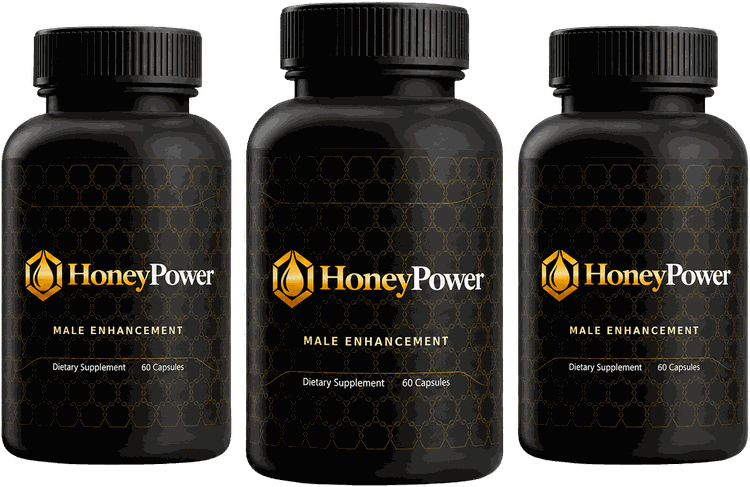
All six HoneyPower ingredients and the dose each one was studied at
The long version of the dosage table, one plant at a time, with every trial named.
Home › Blog › Ingredient deep dive
A real research file, in the wrong department — and doses a capsule cannot reach.
Honey has been sold as a male tonic for about as long as anyone has been writing things down, and it is having a commercial moment again. It is also one of the few ingredients in this category with a genuine body of human research behind it.
The catch is the department. Honey's research file is metabolic and athletic. It is not sexual, and the gap between those two things is where most of the marketing lives.
The best-known trial in trained men gave 70 grams of natural honey 90 minutes before each training session, for eight weeks, to competitive cyclists, and looked at seminal plasma cytokines, oxidative stress biomarkers and antioxidants during intensive training. That is a real study with a real result, and it is about oxidative stress under training load.
A randomised crossover trial at 1.2 grams per kilogram of bodyweight per day found honey did not adversely affect the blood lipids of adult men and women compared with sucrose. A controlled comparison at 50 grams of carbohydrate from honey daily for 14 days found honey, sucrose and high-fructose corn syrup produced similar metabolic effects in glucose-tolerant and glucose-intolerant people.
And the most recent: a 2025 crossover trial of a honey-powder-based carbohydrate and protein supplement found no improvement in endurance cycling performance.
This is the association the category leans on hardest, and it is worth being precise about. The record this desk could find is a gerbil study examining jujube honey's protective effect against bisphenol-A-induced testicular dysfunction.
That is an animal study about a specific toxic exposure. It is not a finding about healthy men, and nothing in it should be carried across to a capsule.
Every honey trial above used tablespoons. Fifty grams is roughly three tablespoons. Seventy grams is a generous four. Even the lowest studied dose is measured in a unit that does not fit inside a capsule, which holds milligrams.
A capsule is a container that holds roughly 800 mg of powder. Honey's smallest studied dose is about sixty times that, before you account for the fact that a six-ingredient capsule has to share its space five other ways.
This is not a knock on any particular brand. It is a fact about the format, and it applies to every honey capsule on the market. If you want honey at a studied dose, you buy a jar.
Three packs from $49 a bottle, one-time payment, and a 180-day money-back window published by the seller. Check the current price before you decide.
Check Price On The Official SiteTwo honest things.
Identity. Honey is a recognisable, pleasant, food-first idea in a category full of Latin plant names and hard-edged marketing. That is a legitimate reason for a brand to build around it.
Carbohydrate, where there is enough of it. Honey's athletic research is about carbohydrate availability and oxidative stress under training load. At spoonful doses before a session, that is real. At capsule doses, it is not a meaningful carbohydrate source.
Honey's documented harms are specific and neither applies to a capsule taken by an adult.
Grayanotoxin poisoning — "mad honey disease" — comes from honey made from rhododendron nectar in particular regions, and the clinical reviews describe it at spoonful doses. Infant botulism is the reason honey is kept away from children under one year old.
Neither is a reason to avoid a honey supplement as an adult. Both are worth knowing, because they are reminders that honey is a biologically active food rather than an inert sweetener.
If a product is built around honey, the honest question is not "does honey work" — it is "how much honey is in here, and is that anywhere near what was studied?" For a capsule, the answer is almost always no, and the brand is really selling you the other ingredients with honey on the label.
That is exactly the reasoning we apply to every ingredient in our full breakdown of the six botanicals in HoneyPower.
The long version of the dosage table, one plant at a time, with every trial named.
Proprietary blends, label dressing and the four checks that take a minute each.
What the trial timelines say, and why week one is the worst moment to judge.
The seller publishes a 180-day window from the date of purchase, empty bottles included. Check the current price and the terms on the official checkout before you order, and keep your order confirmation.
Check Price On The Official SiteFrom $49 a bottle · read the guarantee first · this page earns a commission on referred sales